
Why one good photographer beats ten stock images
Specifiers can smell a stock library. Original architectural photography is the fastest trust signal you can buy.
- Topic
- Photography
- Read
- 5 min
- By
- Cornerstone Group
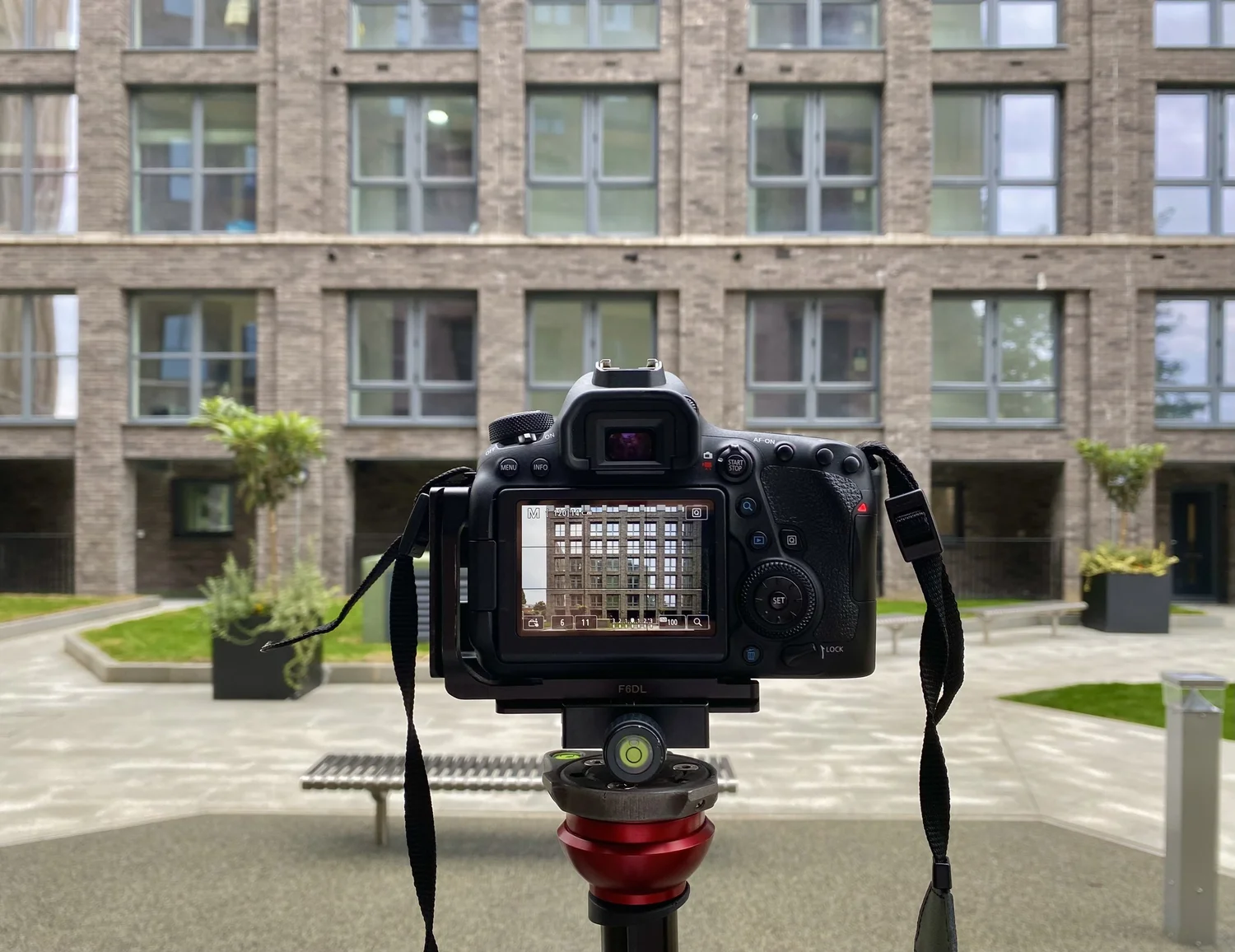
Scroll any built environment website and you can spot the stock photography in a second. The too-perfect boardroom. The hard hat and hi-vis models pointing at a blueprint. The handshake in front of a crane that could be anywhere on earth. Your buyers spot it just as fast, and it quietly tells them something you never intended to say.
In a sector that runs on trust, that is an expensive message to send.
What stock photography actually says
A stock library says one of two things to a specifier or developer. Either you could not be bothered to show your own work, or you do not have work worth showing. Neither is true, but that is not the point. Perception is the only thing operating in the few seconds someone spends deciding whether you are credible.
Specifiers cannot see your craft on a website. They can only see the pictures. If the pictures are generic, so are you, whatever the reality on site.
What your own work does instead
Original photography of your own projects does the opposite. It proves the work is real, it shows the standard you hold, and it makes everything else you publish look more considered. One strong set of images will lift your website, your proposals, your social, your PR and your ads all at once.
It is proof, not decoration
A real project, well shot, is evidence. A stock image is wallpaper. Only one of them wins trust.
It is unmistakably yours
Competitors can buy the same stock library. They cannot buy a photograph of your building, your install, your team.
It works everywhere
Shoot once and the images feed the website, the deck, the case study, the campaign and the coverage. The cost per use falls the more you publish.
It ages well
Genuine project photography stays relevant for years. Trend-led stock dates the moment the trend does.
The one thing worth getting right
You do not need a library of thousands. You need a strong, consistent set of your best work, shot to be published, and used everywhere your buyers look. That is the fastest, most durable trust signal a built environment brand can buy, and it is one most of your competitors are still ignoring.
Where the brief usually goes wrong
The commissioning decision matters more than the camera. Firms who end up disappointed with a shoot have almost always made one of three decisions badly, and all three are made before anybody arrives on site.
Booking at the wrong moment
A space photographs best finished, cleaned and unoccupied. Two weeks later it has boxes in it, and six months later it has been lived in. The window is short and it closes for good.
Briefing a look instead of a use
Asking for nice photographs of the project produces nice photographs of the project. Asking for images that have to work as a case study, a press submission and a set of social posts produces a different and far more useful shot list.
Buying the shoot but not the licence
A per-use licence feels cheaper until you want to run an advert, submit for an award and print a brochure. Agree the usage you actually need at the point of booking, not the first time you are told no.
It is also worth deciding in advance who will be in the pictures. A building with nobody in it reads as a rendering. One or two people working, properly lit and not staring down the lens, is the difference between an image that proves a space is used and one that only proves it exists.
Get those decisions right and the day itself is straightforward. The photographer knows what the images are for, the space is in the condition it deserves to be seen in, and you finish the day owning a library rather than renting a folder.
What one day on site actually produces
A single properly planned shoot day on one good project typically delivers thirty to forty finished, retouched images: exteriors in the right light, interiors, the details that show craft, and your people actually working. That one set then goes to work everywhere at once.
The website
Heroes, project pages and service pages, all showing your own work instead of everyone else's licence.
Proposals and tenders
A bid full of your own finished projects reads like evidence. One full of stock reads like a template.
Social and PR
Months of posts and every press pitch, fed from one day. Publications will not run stock, they will run good project photography.
Recruitment
Candidates look you up like buyers do. Real sites and real people pull far harder than a careers-page handshake.
And you own the set. No licence renewals, no wondering which competitor is running the same picture, no model releases from people who have never set foot on your site.
We came up behind the lens before we ever built a website, photographing architecture and construction across London. It is why we treat imagery as proof rather than decoration, and why we would always rather shoot one project properly than paper over a site with stock.
The simplest way to think about it: stock imagery is rented, and it is rented by everyone. Photography of your own work is owned, it is specific to you, and it is the only imagery a competitor cannot buy from the same library an hour after visiting your website. That alone usually covers the day rate.